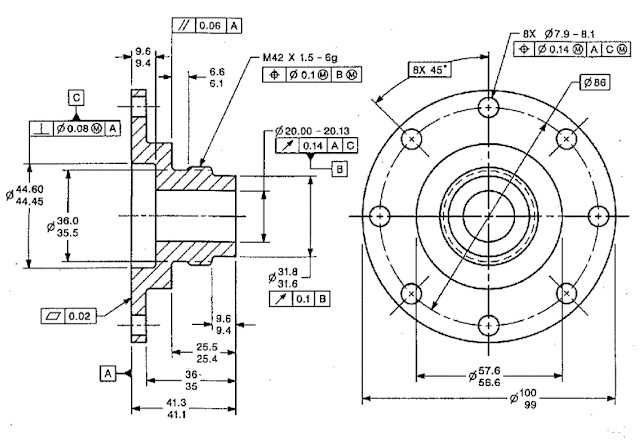
Figure 2 – Example of geometrical tolerancing on a drawing.
This is especially important in industries like aerospace and automotive, where components must cope with high forces and tight safety requirements. By combining CAD, FEA, and appropriate tolerances, engineers can produce parts that are both strong and efficient to manufacture.
Geometrical tolerancing also plays a key role during inspection. The symbols provide clear instructions about what must be measured and how precise the feature needs to be. Because these symbols are recognised internationally, teams from different suppliers and customers can work to the same expectations, reducing misunderstandings and maintaining consistent quality.
Overall, engineering drawings, GD&T, CAD modelling, and FEA work together to create reliable, accurate, and cost-effective products. Drawings communicate the design, tolerances define the required precision, CAD gives a detailed 3D model, and FEA checks performance before manufacturing begins. Without these tools working side by side, the high standards expected in modern engineering simply wouldn’t be possible.
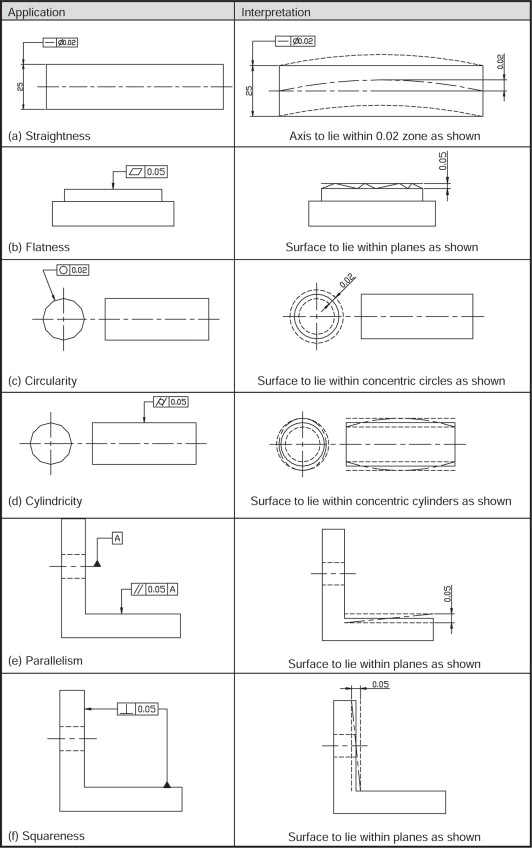 Tolerances are a central part of these drawings. Since no part can be manufactured to a perfect measurement, tolerances define how much variation is acceptable. A simple dimension like 10 mm ±0.1 mm gives manufacturers enough freedom to produce a working part while still ensuring that everything fits together properly. However, size tolerances alone don’t control important geometric factors such as alignment, straightness or flatness, which is why engineers also use geometrical tolerancing.