Search

Workplace Transport Safety in the UK Food, Drink, and Agriculture Sectors

Workplace Transport Safety in the UK Food, Drink, and Agriculture Sectors

The food and drink sector employs over 440,000 workers in the UK, and the agriculture industry alone contributes £11 billion annually to the UK's gross value added (GVA). At Finch Consulting we are proud to actively support these sectors by helping them manage some of their most serious risks.

Posted

09.09.2024

Written by

Richard Bowen

One of the areas where we continue to see a persistent challenge is workplace transport- a critical issue in many industries, but highly significant in the food, drink, and agriculture sectors. In these environments the movement of goods, materials, livestock and people presents unique hazards. Whether it’s forklifts moving in complex food processing plants or tractors and harvesters navigating uneven terrain on farms, ensuring transport safety is crucial for protecting workers and reducing costly accidents.

According to the Health and Safety Executive (HSE), between 2023 and 2024, there were 27 reported deaths in the agricultural sector, with transport-related accidents being one of the leading causes. Over the past five years, vehicle-related incidents have accounted for about 30% of all fatalities in agriculture, primarily involving tractors, ATVs (all-terrain vehicles), and other large machinery.


In the food and drink sector, workplace transport is one of the most common causes of injuries, particularly in environments where forklifts and other mechanised vehicles are used. A report from the HSE found that nearly one-third of all serious injuries in this sector were linked to vehicle movements.

In agriculture, workers may need to operate large machinery on uneven, muddy, or sloped terrain. These conditions increase risk, particularly when using older or poorly maintained equipment. Weather conditions also play a significant role, increasing the risk of accidents due to slippery surfaces or reduced visibility.

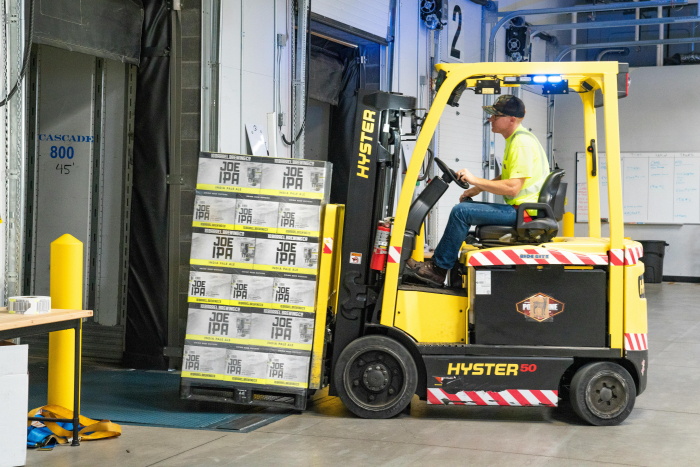
In the food and drink sectors, workers often operate forklifts and other vehicles in limited spaces in warehouses and loading bays. These environments can become congested, increasing the likelihood of collisions between vehicles, workers, and stationary objects. Moreover, temporary or seasonal workers are commonly employed, and they may not be familiar with the work environment and traffic movement.

In both sectors poor planning of transport and pedestrian routes and inadequate training are  major contributors to transport-related accidents. The agricultural industry is particularly affected by training, with many workers being self-employed, working on a seasonal basis, or not having English as a first language, meaning they may not receive the necessary instruction in how to safely operate machinery. Research from the HSE has shown that nearly half of all accidents involving farm vehicles could be prevented through better training and awareness.

In the food and drink sector, while formal training may be more common, there is still a need for comprehensive training programmes, including regular refresher courses for anyone tasked with operating forklifts, pallet trucks, and other vehicles.

In agriculture, the use of old and poorly maintained machinery is a widespread issue. Many small to medium-sized farms operate on tight budgets and may delay replacing or servicing expensive equipment. However, poorly maintained vehicles are more prone to malfunctions and breakdowns, which can increase the risk of accidents. According to a recent by the HSE, farm vehicles involved in accidents were often found to be inadequately maintained, with issues ranging from faulty brakes to missing guards.

The food and drink sector faces similar challenges, with aging infrastructure in warehouses and factories.


Forklifts and other transport vehicles that are not properly maintained pose a significant risk to workers, especially when operating in busy or confined environments.

Technological advancements are playing an increasingly important role in workplace transport. With the introduction of GPS technology allowing for greater control over vehicle movements, and with autonomous vehicles becoming increasingly more common, the risk profile of workplace transport is changing.

These technological advancements can be seen as a step towards improving workplace transport safety, but unfortunately, we have seen cases where the introduction of such technology has not been properly assessed and managed, resulting in catastrophic consequences. However, by following established safety management systems, transport safety in these high-risk environments can be suitably managed.

The consequences of failing to address transport safety in the food, drink, and agriculture sectors can be severe. In addition to the human cost of injuries and fatalities, transport-related accidents can result in significant financial losses. According to the HSE, the average cost of a serious workplace accident in the UK is around £1.6 million, when considering factors such as lost productivity, fines, and compensation claims.

Moreover, companies that fail to comply with health and safety regulations may face substantial fines. For example, in 2022, a food processing company in the Northwest was fined £800,000 after an employee was killed by a reversing vehicle in a loading bay. The investigation found that the company had failed to implement proper safety measures, such as segregating vehicles and pedestrians.

Additionally, in November last year, a poultry farm in the East Midlands was fined £233,000 following the tragic death of a young worker involving a heavy goods vehicle. The HSE have targeted the agricultural sector in its ‘Your farm, your future’ campaign that relaunched earlier this year to improve safety standards in the farming industry.

Workplace transport safety is a critical issue for the UK food, drink, and agriculture sectors. With high rates of accidents and fatalities, these industries must prioritise the implementation of effective safety measures. By conducting regular workplace transport risk assessments, providing comprehensive training, and maintaining equipment, employers can significantly reduce the risk of accidents and protect their workers.

The emerging technology offers new opportunities for improving safety in both sectors. However, the human element remains key, and the fundamentals of workplace transport safety should never be ignored with workplace design, proper training and suitable supervision essential to ensuring safe working environments.

For employers, the cost of getting transport safety wrong is simply too high. By taking a proactive approach to safety, businesses can not only protect their workers but also improve productivity and avoid costly fines or legal action.


Workplace transport: safety practices you should check regularly:

  1. Risk Assessments: Employers should conduct regular risk assessments to identify hazards related to workplace transport. This includes evaluating vehicle condition, driver competence, and environmental factors such as workplace layout, road surfaces and lighting.
  2. Training and Competency: Workers should receive comprehensive training before being allowed to operate any vehicles. Refresher courses should be provided regularly, particularly for seasonal or temporary workers.
  3. Vehicle Maintenance: Regular inspections and maintenance of vehicles are essential to ensuring they remain fit for purpose??. Employers should establish a schedule for routine checks and repairs to minimise the risk of breakdowns or malfunctions. Daily pre-start inspections should be recorded.
  4. Segregation of Vehicles and Pedestrians: Efforts should be made to physically separate vehicles and pedestrians. This may involve the use of barriers, designated walkways supported by clear signage.

Finch can help….please contact [email protected]

Related insights

Finch Consulting
Privacy Overview

This website uses cookies so that we can provide you with the best user experience possible. Cookie information is stored in your browser and performs functions such as recognising you when you return to our website and helping our team to understand which sections of the website you find most interesting and useful.