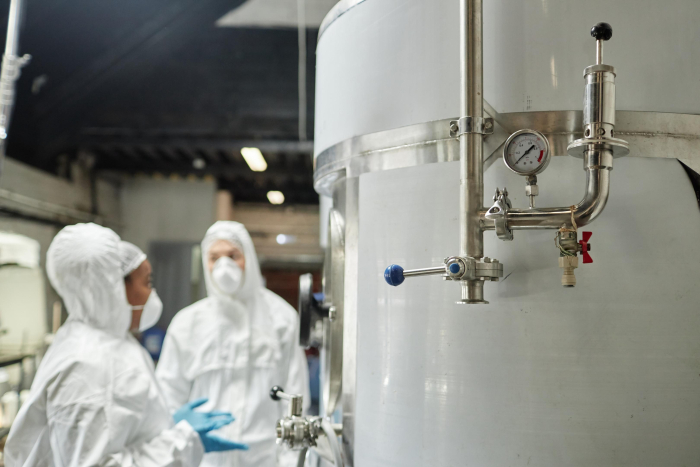
A Hazard and Operability (HAZOP) study is a specialised form of risk assessment designed for complex processes. It is used to identify potential hazards, test assumptions and examine how deviations from the intended design could create safety risks or operational issues within complex systems.
Posted
01.06.2026
Written by
In high hazard environments, the decision is rarely about how large a change appears. It comes down to whether that change alters the behaviour of the process in a way that is no longer fully understood.
A Hazard and Operability (HAZOP) study is a specialised form of risk assessment designed for complex processes. It is used to identify potential hazards, test assumptions and examine how deviations from the intended design could create safety risks or operational issues within complex systems.
Not every modification requires a HAZOP study, but every change must be supported by a suitable and sufficient risk assessment. Where that assessment cannot clearly demonstrate that identified risks remain controlled, a more structured and detailed analysis becomes necessary.
Understanding when a HAZOP becomes necessary
A HAZOP study tends to become necessary at the point where a change stops being local and starts influencing the wider process. This is not always obvious at the outset.
For example, adjusting a single parameter such as pressure or flow may appear contained, yet it can affect residence time, reaction behaviour or downstream equipment performance. Once those interactions come into play, the process is no longer predictable through simple cause and effect. It becomes a system problem rather than a component problem.
In these situations, the HAZOP analysis provides a structured method for working through uncertainty. A multidisciplinary team reviews process flow diagrams, piping and instrumentation diagrams and operating data, applying guide words to identify deviations, causes and potential consequences. This allows the team to identify hazards and understand how they propagate across the process.
Where that level of interpretation is required, a general risk assessment is no longer sufficient on its own.
Why general risk assessment has its limits?
A general risk assessment is designed to give an overview of risks across tasks or activities. It works well where systems are stable and interactions are limited.
A hazard and operability study, by contrast, is specifically designed for complex processes where behaviour is less predictable. It focuses on identifying hazards by examining how the process could deviate from its design intent, rather than simply listing known risks.
This distinction becomes important in environments involving hazardous materials, high pressures or tightly coupled systems. A deviation in one area can introduce potential risks elsewhere, often in ways that are not immediately visible.
That is why HAZOP is widely used as a deeper form of hazard identification. It does not replace a general risk assessment, but it extends it, allowing organisations to explore scenarios that would otherwise remain untested.
Process change and the point where uncertainty increases
Process change is one of the most common triggers for a HAZOP study, largely because it introduces uncertainty into systems that were previously stable. Even relatively small changes can create new operational risks if they affect multiple parts of the process or rely on assumptions about how equipment and control systems will respond. Over time, incremental modifications can also accumulate, gradually shifting the process away from its original intended design.
From a regulatory perspective, organisations are expected to demonstrate that risks remain controlled following any change. In practice, this means showing that safety measures are still effective, that no new significant hazards have been introduced, and that the process continues to operate within safe limits.
Where that demonstration becomes difficult, a HAZOP study provides the level of analysis needed to properly assess the change. It allows for a thorough analysis of deviations and consequences, ensuring that risks are understood before implementation rather than discovered afterwards.
Plant upgrades and hidden shifts in risk
Plant upgrades are often approached as improvements, but they can introduce subtle changes in how a system behaves.
Replacing equipment with higher capacity units, altering duty cycles or upgrading control systems can all affect how the process responds under both normal and abnormal conditions. These changes may not introduce immediate hazards, but they can reduce the margin for error or create new combinations of failure.
What makes this challenging is that the impact is rarely isolated. A change in one part of the system can influence performance elsewhere, particularly in complex systems where components are interdependent.
A HAZOP analysis allows these interactions to be explored in a structured way. By systematically examining possible deviations and their consequences, it becomes possible to identify potential hazards that would not be captured through a simpler review.
Introducing new hazardous materials
The introduction of new hazardous materials is one of the clearest indicators that a HAZOP study may be required, particularly where the material behaves differently from those already in use.
New substances can alter fire and explosion characteristics, create different exposure pathways and introduce additional environmental considerations. Regulatory frameworks such as Dangerous Substances and Explosive Atmospheres Regulations (DSEAR) and Control of Substances Hazardous to Health (COSHH) require these risks to be assessed before work begins, but compliance alone does not guarantee that all interactions have been considered.
A general risk assessment will identify key hazards, but it may not fully capture how the material behaves within the process, especially when combined with existing substances or operating conditions. This is where a hazard and operability study becomes valuable.
By examining the process in detail, the HAZOP team can identify hazards, assess potential consequences and determine whether existing safeguards remain effective. Where inventories increase, this may also trigger additional considerations under major hazards regimes such as Control of Major Accident Hazards (COMAH), reinforcing the need for a structured approach.
When a simpler approach may still be appropriate
There are cases where a full HAZOP study is not required, particularly where changes are minor, well understood and clearly within existing operating limits. In these situations, a proportionate risk assessment can be sufficient, provided it demonstrates that the change does not affect process parameters, introduce new potential hazards or reduce the effectiveness of existing safeguards. The key requirement is that the assessment is robust and evidence based. All process changes should go through a management of change process to ensure the change is captured and risk assessed appropriately.
Difficulties tend to arise when assumptions are made rather than demonstrated. If there is uncertainty around how the process will respond, or if the assessment cannot clearly show that risks remain controlled, then a more detailed approach is justified.
In practice, organisations often choose to escalate to a HAZOP study where there is any ambiguity. This reflects the reality that complex processes do not always behave in predictable ways.
What defines a successful HAZOP study
The quality of a HAZOP study depends heavily on preparation. The preparation phase ensures that the HAZOP team has access to accurate and complete information, including process flow diagrams, piping and instrumentation diagrams, operating data and relevant operating procedures.
Without this, the analysis becomes less reliable and the ability to identify hazards is reduced.
During the study, guide words are used to explore deviations in a structured way, allowing the team to identify hazards, assess consequences and evaluate the effectiveness of existing safeguards. This process is deliberately detailed and can be time consuming, but it is what enables a deeper understanding of the system.
The final stage, often referred to as the follow up phase, is where recommendations are implemented and verified. This is critical. Without proper follow up, even a well-executed HAZOP study will have limited impact on actual safety performance.
The role of HAZOP within process safety
Across high hazard industries, HAZOP is widely regarded as a critical tool for managing risk within complex systems. It supports hazard identification, informs design decisions and helps ensure that processes remain safe as they evolve.
It also plays an important role within broader safety management systems, linking detailed technical analysis with operational decision-making. This integration is particularly important where changes are frequent or where systems are highly interconnected.
For organisations managing major hazards, HAZOP provides a consistent framework for identifying hazards, assessing risks and ensuring that appropriate controls are implemented.
How Finch support HAZOP studies
We support organisations at each stage of the HAZOP process, from early scoping through to implementation and follow up.
Our starting point is always to establish whether a HAZOP study is the appropriate level of risk assessment. Where it is, we define a clear scope aligned to the process, the level of change and the specific hazards involved. This ensures the study remains focused and proportionate, particularly in complex systems where over-scoping can dilute value.
We then work with our clients to assemble a multidisciplinary team with the right operational and technical knowledge. Using up-to-date process flow diagrams, piping and instrumentation diagrams and operating data, we facilitate a structured HAZOP analysis using guide words to identify deviations, causes and potential consequences.
Our role is not limited to facilitation. We ensure that identified risks are properly assessed, that recommendations are practical, and that outcomes are clearly documented. The follow up phase is treated as a core part of the process, with support provided to track actions through to implementation so that the HAZOP study delivers measurable improvements in safety and performance.
Why choose Finch Consulting
We bring a combination of engineering expertise and applied process safety experience, allowing us to interpret complex processes rather than simply document them. This is particularly important where changes affect existing systems, introduce new hazardous materials or alter process parameters in ways that are not immediately obvious.
Our approach is grounded in practical application. We focus on identifying hazards that matter, understanding how they translate into operational risks, and ensuring that safety measures are realistic and implementable within live operations. This reduces the likelihood of recommendations that are technically correct but operationally impractical.
We also place emphasis on integration with wider safety management systems, ensuring that the outputs of a HAZOP study are not isolated documents but part of an ongoing approach to managing major hazards, maintaining occupational safety and supporting regulatory compliance.
Summary
A HAZOP study is not required for every change, but it becomes essential where uncertainty cannot be resolved through a general risk assessment.
This typically includes changes affecting complex processes, the introduction of new hazardous materials, modifications to safeguards or situations where the consequences of failure are not fully understood.
In those cases, a structured hazard and operability (HAZOP) study provides the level of analysis needed to identify hazards, assess risks and ensure that appropriate controls are implemented before changes are introduced into live operations.
FAQ
Is a HAZOP required by law whenever there is a process change in the UK?
Not automatically. What the law requires is a suitable and sufficient risk assessment and formal control of changes. A HAZOP study becomes necessary when the change is significant enough to require a structured analysis of deviations, causes, consequences and safeguards.
Does replacing or introducing a new hazardous substance require a HAZOP?
Not always, but often yes. If the new substance alters risks of fire, explosion, runaway reaction, corrosion, occupational exposure, zoning or regulatory inventory, a HAZOP study becomes strongly recommended, alongside reviews under DSEAR and COSHH.
Can a minor plant upgrade be dealt with without a HAZOP?
It can, provided the company can technically demonstrate that the change is limited, does not alter the design intent, does not affect safeguards, and does not create new relevant accident scenarios. If there is serious doubt about this, the simplified review is no longer sufficient.
Are DSEAR and HAZOP the same thing?
No. DSEAR is the legal framework for controlling fire and explosion risks caused by hazardous substances. HAZOP is a structured method for hazard and operability analysis. In many projects, they complement each other. DSEAR may require hazardous area classification, whilst HAZOP assesses process deviations and broader abnormal events.
If the change increases the inventory of hazardous substances, what else needs to be checked?
In addition to the technical study, it is necessary to check whether the installation falls within the scope of COMAH or changes the COMAH tier rating. When this happens, additional obligations regarding the notification and management of major accident hazards to the competent authority may arise.
What are the essential elements of a well-executed HAZOP?
A clear scope, up-to-date documentation, a competent multidisciplinary HAZOP team, a thorough HAZOP analysis designed to identify potential hazards and guided by our methodology and guide words, a complete record of decisions, objective recommendations, and follow-up to verify implementation. Without these, the HAZOP ceases to be a tool for improvement and becomes nothing more than paperwork.